Top 3 Tusa Imprex Dive Boots Compared for Reef and Shore Diving
Compare the best tusa imprex dive boots for reef and shore diving. See fit, warmth, sole grip and cons to pick the right pair for your dives.
 By Miles Sinclair
Updated November 13, 2026
 By Miles Sinclair
Updated November 2026
Choosing tusa imprex dive boots comes down to four things: how the boot fits over a wetsuit bootie or bare foot, how much warmth the neoprene gives, how well the sole grips wet rock and boat decks, and whether the zipper or closure holds up over repeated rinsing. The three picks below are compared on those criteria using manufacturer specs and common owner feedback patterns.
Best overall: TUSA SS 5mm Dive Boot – View on Amazon
Best for hard-sole reef entries: TUSA Hard Sole HS 5MM Dive Boot – View on Amazon
Best for cold-water warmth and grip: AQUALUNG Echozip Dive Boots – View on Amazon
Our Top Picks
Quick Comparison
| Product | Best for | Key feature |
|---|---|---|
| TUSA SS 5mm Dive Boot | General reef and shore dives | 5mm neoprene, versatile fit |
| TUSA Hard Sole HS 5MM | Rocky entries and walks | Reinforced hard sole |
| AQUALUNG Echozip | Cooler water and boat diving | Treaded sole, YKK zippers |
TUSA SS 5mm Dive Boot
TUSA SS 5mm Dive Boot, Black, Size 11
Best for: General reef and shore diving with a balance of warmth and flexibility.
This is a good fit for divers who want one pair of boots for mixed conditions and who plan to wear them with a standard fin strap.
Pros
- 5mm neoprene offers solid warmth for temperate and tropical water
- Flexible construction makes walking to the entry comfortable
Cons
- Thinner sole offers less protection on sharp lava rock
TUSA Hard Sole HS 5MM Dive Boot

TUSA Hard Sole HS 5MM Dive Boot, Black, Size 10
Best for: Rocky shore entries and reef walks where sole protection matters most.
Suited to divers who regularly enter over uneven volcanic rock or coral rubble and want a firmer platform underfoot.
Pros
- Reinforced hard sole resists abrasion on rough entries
- 5mm neoprene keeps feet warm through longer surface intervals
Cons
- Stiffer sole can feel less flexible for long walks
AQUALUNG Unisex Echozip Dive Boots 5mm
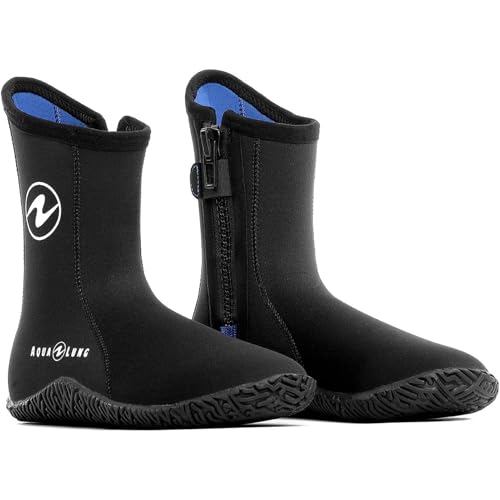
AQUALUNG Unisex Echozip Dive Boots – Durable Warm Flexible Neoprene Scuba Diving Boots for Men & Women – Enhanced Protection, Slip-Resistant Treaded Sole & YKK Zippers, Black/Blue, 11, 5mm
Best for: Cooler water and boat diving where slip resistance on wet decks matters.
A practical choice for divers who want a treaded sole and YKK zippers, particularly on boats with slick fiberglass or metal decks.
Pros
- Slip-resistant treaded sole grips wet surfaces well
- YKK zippers are a common durability point owners mention
Cons
- Zipper boots take a little more time to put on and remove
Buying Guide
Fit Over Your Wetsuit or Booties
Measure your foot and check the manufacturer size chart before ordering, because neoprene stretches less than fabric and a tight fit restricts circulation. Try them on with the socks or booties you will actually wear. For sizing help, see Dive Boots Size Chart: How to Size Dive Boots Right the First Time.
Thickness and Warmth
A 5mm neoprene boot retains more heat than a 3mm model, which matters in water below about 75°F. Thicker neoprene is also less flexible, so balance warmth against comfort for your typical dive temperature.
Good picks for this: TUSA SS 5mm Dive Boot, AQUALUNG Echozip Dive Boots
Sole Grip and Protection
Hard soles protect the foot on rocky entries, while treaded soles grip wet boat decks and ladders. Consider where you dive most often before choosing.
Good picks for this: TUSA Hard Sole HS 5MM Dive Boot, AQUALUNG Echozip Dive Boots
Closure and Durability
Zippers and rubber cuffs wear differently over time. Rinse boots in fresh water after every dive and store them out of direct sun to extend their life. Our guide on How to Clean Dive Boots: A Step-by-Step Guide to Keep Them Fresh covers the routine.
FAQ
Do tusa imprex dive boots run true to size?
Most divers find sizing follows the manufacturer chart, but neoprene fit can vary, so measure your foot and compare against the chart before ordering.
Are 5mm boots too warm for tropical diving?
In water above about 80°F, many divers find 3mm boots more comfortable, while 5mm suits cooler conditions or longer dives.
Can I wear dive boots with fins?
Yes, but check that the boot fits inside your fin pocket or uses an open-heel fin strap so the fin sits securely without pinching.
Conclusion
For general reef and shore diving, the TUSA SS 5mm is a versatile starting point. Choose the Hard Sole HS 5MM if rocky entries are your main concern, and the AQUALUNG Echozip if you dive from boats or in cooler water where grip and warmth matter most. Consult a dive professional if you have circulation or foot health concerns before choosing a fit.
Sources
- Guidance on water safety and marine environment hazards in coastal dive sites (nps.gov)
- Information on water temperature patterns that affect thermal protection needs (noaa.gov)
Related reading
- Types of Dive Boots: Which Style Fits Reef and Shore Diving?
- Tilos TruFit Low Cut Dive Boots Review: Who Is It For?
About Miles Sinclair
Miles Sinclair is part of our editorial team and reviews and edits our scuba diving gear guides, checking product details against manufacturer specifications and owner feedback.
About the author
Miles Sinclair writes reviews and buying guides for Scuba Lanai.