3 Best O’Neill Dive Boots Compared for Reef and Boat Diving (2026)
Comparing O'Neill dive boots for reef and boat diving? See three picks by warmth, sole grip and fit, plus a buying guide to choose the right pair.
 By Miles Sinclair
Updated November 13, 2026
 By Miles Sinclair
Updated November 2026
O’Neill dive boots are a practical choice for divers who want neoprene protection on cold water entries, rocky shore exits and slippery boat decks. The three options below were selected by comparing manufacturer specifications, brand reputation and common owner feedback on warmth, sole traction and fit. Nothing here comes from personal testing, so check sizing and specs on the listing before you buy.
Our top picks at a glance
- 1TOP CHOICEBest overallO'NEILL Heat 3mm Split Toe Neoprene BootView on Amazon
- 2
 Best for colder waterO'NEILL Heat 5mm Round Toe Neoprene BootView on Amazon
- 3
 Best for warm-water reef tripsO'Neill Superfreak Tropical ST BootView on Amazon
Our Top Picks
Quick Comparison
| Product | Best for | Key feature |
|---|---|---|
| O’NEILL Heat 3mm Split Toe Neoprene Boot | Mixed reef and shore dives | Textured rubber sole |
| O’Neill Superfreak Tropical ST Boot | Warm-water reef trips | Thin, light neoprene |
| O’NEILL Heat 5mm Round Toe Neoprene Boot | Cooler water and longer dives | Thicker insulation |
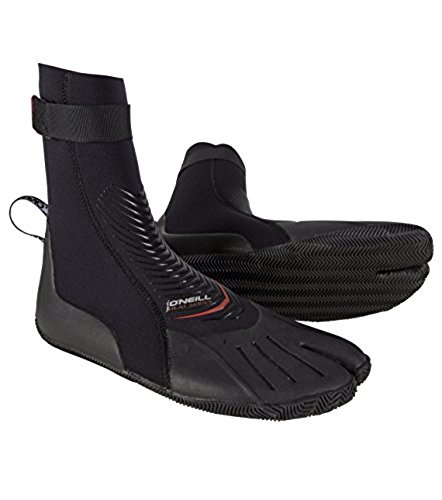
O’NEILL Heat 3mm Split Toe Neoprene Boot
O'NEILL Heat 3mm Split Toe Neoprene Boot, Black, 6 | Textured Rubber Sole for Cold Water Surfing, Paddleboarding, Snorkeling, and Any Water Activities
Best for: Mixed reef and shore diving in moderate water
This is a versatile all-round boot for divers who move between warm reef days and cooler mornings. The split toe design is often described by owners as easier to pull on over a wetsuit bootie.
Pros
- Textured rubber sole for grip on wet rock and boat decks
- Light enough for long days of walking to the entry point
Cons
- Less insulation than a 5mm boot in cold water
O’Neill Superfreak Tropical ST Boot
O'Neill Superfreak Tropical ST Boot Black 5
Best for: Warm-water reef trips
Suited to divers in tropical water who want a lightweight boot that keeps feet protected from coral and sharp rock without trapping heat.
Pros
- Low-bulk neoprene that dries relatively quickly
- Good flexibility for fins and boat boarding
Cons
- Offers limited warmth if water temperatures drop
O’NEILL Heat 5mm Round Toe Neoprene Boot
O'NEILL Heat 5mm Round Toe Neoprene Boot, Black, 11 | Textured Rubber Sole for Cold Water Surfing, Paddleboarding, Snorkeling and All Water Activities
Best for: Cooler water and longer bottom times
Aimed at divers in cooler regions or those who spend extended time in the water and want more thermal protection for the feet.
Pros
- Thicker neoprene for noticeably more warmth
- Textured sole with a round toe for a secure feel on ladders and rocks
Cons
- Heavier and slower to dry than thinner boots
Buying Guide
Thickness and water temperature
Thickness is the main driver of warmth. Many divers pair 3mm boots with warm water and move to 5mm when temperatures fall, but check your local conditions and any guidance from your dive operator.
Sole grip
A textured rubber sole matters on wet boat decks and algae-covered rock. Look for a sole that stays grippy when wet rather than one that only looks rugged.
Toe style and fit
Split toe and round toe designs differ in how they fit over booties and how they flex. Try the boot on with the socks or bootie you plan to wear, and follow the manufacturer’s size chart. The guide on how dive boots should fit is a useful reference.
Drying and weight
Heavier neoprene holds more warmth but takes longer to dry and adds weight to a dive bag. If you travel with your gear, a thinner boot may be easier to manage.
Good picks for this: O’NEILL Heat 3mm Split Toe Neoprene Boot and O’NEILL Heat 5mm Round Toe Neoprene Boot
FAQ
Are O’Neill dive boots good for reef diving?
Owners often report that thinner O’Neill boots work well for reef and shore dives in warm water, mainly for protection and grip. Choose thickness based on your typical water temperature.
How should dive boots fit?
They should feel snug without pinching, with room for your bootie or sock. A guide to sizing dive boots covers the details.
Can I wear dive boots for snorkeling?
Yes, many people use them for snorkeling and paddling, though the thicker 5mm boot may feel warm in shallow tropical water.
Conclusion
For warm-water reef trips, the O’Neill Superfreak Tropical ST Boot is a lightweight fit. The 3mm Split Toe model suits mixed reef and shore days, while the 5mm Round Toe boot is the better choice for cooler water and longer dives. Always confirm sizing and warmth needs before you buy.
Sources
- Guidance on ocean conditions and water temperature for coastal and reef activities (noaa.gov)
- Reef and shoreline safety information for visitors entering the water (nps.gov)
Related reading
- O'Neill 5mm Wetsuit Boots: Fit, Warmth and Buying Guide for Island Divers
- Types of Dive Boots: Which Style Fits Reef and Shore Diving?
- Top 3 Tusa Imprex Dive Boots Compared for Reef and Shore Diving
- Tilos TruFit Low Cut Dive Boots Review: Who Is It For?
- Tilos TruFit Dive Boots Review: Who Is It For?
About Miles Sinclair
Miles Sinclair is part of our editorial team and reviews and edits our scuba diving gear guides, checking product details against manufacturer specifications and owner feedback.
About the author
Miles Sinclair writes reviews and buying guides for Scuba Lanai.