Top 5 SEAC R15 Dive Light Picks Compared for Night and Reef Diving
Compare the best SEAC R15 dive light alternatives and SEAC-family picks for night and reef diving, with specs, pros, cons and who each one suits.
 By Miles Sinclair
Updated November 12, 2026
 By Miles Sinclair
Updated November 2026
Choosing a seac r15 dive light, or a replacement for it, comes down to a handful of things: how many lumens you actually need at depth, how long the battery lasts on the setting you use most, how the light is mounted and how easily you can recharge it between dives. This list compares five lights from the SEAC family and related dive-light listings on Amazon US, ordered by how closely each one fits those needs. Every pick here is based on manufacturer specifications, brand reputation and common owner feedback patterns. None of these lights were bench-tested or dived by the author for this article.
Our top picks at a glance
- 1TOP CHOICEBest overallSEAC i50 Flashlight for Scuba Diving with Magnetic RechargeView on Amazon
- 2
 TOP CHOICEBest for high output reef workSeac 1500 Lumens i35 Dive LightView on Amazon
- 3
 TOP CHOICEBest for compact backup useSEAC T5 Aluminum Scuba Dive LightView on Amazon
- 4
 Best budget pickDive Light 3000 Lumens Scuba Diving FlashlightView on Amazon
- 5
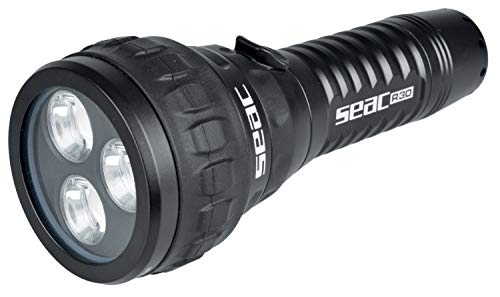 Best for rechargeable micro-USB setupsSEAC R30 1500 Lumens LED Underwater Micro-USB Rechargeable Black Scuba Diving FlashlightView on Amazon
Our Top Picks
The table below gives a quick side-by-side view. Read the individual sections for the details that matter when you are standing on a boat deck with a light in one hand and a dive plan in the other.
| Product | Best for | Key feature |
|---|---|---|
| SEAC i50 Flashlight for Scuba Diving with Magnetic Recharge | Divers who want a sealed, no-port recharge routine | Magnetic recharge |
| Seac 1500 Lumens i35 Dive Light | Reef and wall dives needing high output | 1500 lumen rating |
| SEAC T5 Aluminum Scuba Dive Light | Compact backup or buddy light | Small aluminum body |
| Dive Light 3000 Lumens Scuba Diving Flashlight | Budget-conscious divers and night beginners | IPX8 waterproof rating |
| SEAC R30 1500 Lumens LED Underwater Micro-USB Rechargeable Scuba Diving Flashlight | Divers who already own micro-USB chargers | Micro-USB rechargeable |
SEAC i50 Flashlight for Scuba Diving with Magnetic Recharge
SEAC i50, Flashlight for Scuba Diving with Magnetic Recharge
Best for: Divers who want a sealed, no-port recharge routine and fewer O-ring checks.
This is the closest thing on the list to a true successor for someone looking for a seac r15 dive light. Magnetic recharging is useful for divers who rinse and store their gear often, because the charging contacts stay sealed and there is no port to dry out before the next dive.
Key specs
- Magnetic recharge design (no exposed charging port)
- Designed for scuba diving use per manufacturer listing
- Handheld form factor suited to primary or backup use
Pros
- Sealed recharge reduces port maintenance
- Familiar SEAC build philosophy for existing SEAC owners
- Simple charge routine between day and night dives
Cons
- Charge time and full run time depend on the exact listing configuration, so confirm before buying
- Owners sometimes report that magnetic chargers need careful alignment to seat correctly
Bottom line: A strong first choice for divers who value a sealed, low-maintenance recharge process.
View on AmazonSeac 1500 Lumens i35 Dive Light
Seac 1500 Lumens i35 Dive Light
Best for: Reef and wall dives needing high output for color correction and visibility.
The 1500 lumen rating places this light at the high end of the group. Divers who spend time on reef walls, where daylight fades quickly below 15 meters, will get more benefit from output than from compact size. Higher output also helps with navigation in turbid water.
Key specs
- 1500 lumen rated output (per listing name)
- Designed for underwater dive use
- Output drops over runtime as the battery drains, so check the mode table
Pros
- High output for reef color and wall work
- Good fit for experienced divers who run bright light most of the dive
- Pairs well with a lower-output backup
Cons
- High output means shorter runtime at full power
- Larger size than compact backup lights
Bottom line: Pick this if you regularly dive reefs or walls and want maximum light at depth.
View on AmazonSEAC T5 Aluminum Scuba Dive Light
SEAC T5, Aluminum Scuba Dive Light, 300 Lumen, Cree XPG2 LED, Dimensions 14.4×3.2 mm, Black, Standard
Best for: Compact backup use or a secondary light clipped to a BCD.
The T5 is small, which makes it easy to carry as a backup light or a buddy light for checking a partner’s gauges. Its aluminum body is a common choice for divers who prefer metal construction over plastic.
Key specs
- Aluminum body
- 300 lumen output (per listing name)
- Cree XPG2 LED (per listing name)
- Listed dimensions: 14.4 x 3.2 mm (as shown in the listing name; confirm against the product page)
Pros
- Compact and easy to clip or stow
- Aluminum build feels solid in hand
- Good backup choice for a second light
Cons
- 300 lumens is modest for primary use on deep reef dives
- Smaller battery capacity means shorter runtime at full output
Bottom line: A useful secondary light for divers who want a small backup, not a primary reef light.
View on AmazonDive Light 3000 Lumens Scuba Diving Flashlight
Dive Light 3000 Lumens Scuba Diving Flashlight, IPX8 Waterproof 262ft Underwater Flashlight with 3 Modes, Rechargeable Diving Light for Night Diving Cave Snorkeling
Best for: Budget-conscious divers and beginners looking at night dives for the first time.
This listing is a generic-brand dive light with a high lumen claim and an IPX8 waterproof rating. Divers new to night diving may find it a reasonable way to learn light handling before committing to a premium model. Treat the lumen figure as a manufacturer claim and compare it against independent measurements where possible.
Key specs
- 3000 lumen claim (per listing name)
- IPX8 waterproof rating (per listing name)
- Three light modes (per listing name)
- Rechargeable
Pros
- Budget-friendly entry point
- Multiple modes for changing light needs
- IPX8 rating is a recognized standard for submersion
Cons
- Generic brand means less established service and parts support
- Lumen claims on budget lights are often optimistic, so expect less than the number suggests
Bottom line: A reasonable starting light for night beginners, but verify build quality and warranty before depending on it.
View on AmazonSEAC R30 1500 Lumens LED Underwater Micro-USB Rechargeable Black Scuba Diving Flashlight
SEAC R30 1500 Lumens LED Underwater Micro-USB Rechargeable Black Scuba Diving Flashlight
Best for: Divers who already own micro-USB chargers and want one charging cable across devices.
The R30 is the most direct SEAC-family relative of the seac r15 dive light query. Its micro-USB charging makes it easy to top up on a boat or at home using common cables, which is convenient for divers who travel with multiple devices.
Key specs
- 1500 lumen rated output (per listing name)
- Micro-USB rechargeable (per listing name)
- Black finish
- LED underwater use
Pros
- Standard micro-USB charging
- High output for its class
- Familiar SEAC brand for existing owners
Cons
- Micro-USB ports need to be kept dry and sealed after each charge
- Listing is older, so confirm current stock and accessories before buying
Bottom line: A good pick for divers who want SEAC output with simple, common charging.
View on AmazonBuying Guide
Lumens and real-world output
Lumen ratings are measured under controlled conditions and do not account for water absorption. Water removes red and orange light first, and the effect grows with depth. A light rated at 1500 lumens will feel dimmer at 30 meters than on the surface. For reef color, a higher rating helps. For navigation in clear water, a mid-range light is often enough.
Good picks for this: Seac 1500 Lumens i35 Dive Light, SEAC R30 1500 Lumens LED Underwater Micro-USB Rechargeable Black Scuba Diving Flashlight
Runtime at the mode you actually use
Manufacturers often list runtime at the lowest setting. Check whether the number applies to your typical mode. Ask yourself how long a full night dive lasts and whether you need a backup light for the same dive.
Good picks for this: SEAC i50 Flashlight for Scuba Diving with Magnetic Recharge, Dive Light 3000 Lumens Scuba Diving Flashlight
Charging method and sealing
Magnetic recharging keeps the charging interface sealed, which reduces the number of ports that can leak or corrode. Micro-USB and other port-based systems work well when the port is dried and the cap is seated after every charge. Either way, rinse the light in fresh water after each salt dive.
Good picks for this: SEAC i50 Flashlight for Scuba Diving with Magnetic Recharge, SEAC R30 1500 Lumens LED Underwater Micro-USB Rechargeable Black Scuba Diving Flashlight
Size, weight and mounting
A light that is too large to clip to your BCD or hold comfortably will end up left in the bag. Measure the light against your mounting options. Compact lights suit backup duty; larger lights suit primary use.
Good picks for this: SEAC T5 Aluminum Scuba Dive Light, Seac 1500 Lumens i35 Dive Light
Waterproof rating and build
Look for a recognized ingress rating such as IPX8, which describes continuous submersion under specified conditions. Aluminum bodies tend to dissipate heat better than plastic, and metal construction is common among divers who rinse gear often. Check the rating against the depth and duration you plan to dive, and follow the manufacturer’s care instructions.
Good picks for this: SEAC T5 Aluminum Scuba Dive Light, Dive Light 3000 Lumens Scuba Diving Flashlight
Use case: primary, backup or buddy light
Primary lights need enough output and runtime for the whole dive. Backup lights should be small and easy to reach. Buddy lights are used to check a partner’s gear. Matching the light to the job keeps you from overbuying or underbuying.
Good picks for this: Seac 1500 Lumens i35 Dive Light, SEAC T5 Aluminum Scuba Dive Light
Care and maintenance
Rinse the light in fresh water after every salt dive, dry it fully, and inspect O-rings or seals before each trip. Store the light with the battery at a partial charge if the manufacturer recommends it, and never charge a light with a wet port or seal. Follow the manufacturer’s manual for battery handling.
Good picks for this: SEAC i50 Flashlight for Scuba Diving with Magnetic Recharge, SEAC R30 1500 Lumens LED Underwater Micro-USB Rechargeable Black Scuba Diving Flashlight
FAQ
Is the SEAC R15 still available?
Availability changes over time. Check current listings and the manufacturer’s site for the latest models. Several SEAC-family lights in this list cover similar use cases.
How many lumens do I need for night diving?
Many divers use a primary light in the mid-range for night navigation and a higher-output light for reef detail. Water absorbs light quickly, so a higher rating does not guarantee brightness at depth.
Should I carry a backup dive light?
Most dive training agencies recommend a backup light for night dives. A small secondary light is a common choice. Confirm the requirements with your instructor or agency.
What does IPX8 mean?
IPX8 is an ingress protection rating meaning the device is protected against continuous immersion beyond 1 meter, under conditions specified by the manufacturer. Check the listing for the stated depth and duration.
How should I store a rechargeable dive light between trips?
Follow the manufacturer’s storage guidance for battery charge level, keep the light dry, and avoid extreme heat. Consult the manual or a qualified technician for battery-specific questions.
Can I use a magnetic-charge light on a boat?
Yes, provided the charger and light are kept dry and the charging cable is connected to an appropriate power source. Keep electrical connections away from salt water. For any wiring or battery safety questions, consult a qualified marine electrician or the manufacturer.
Conclusion
For most divers searching for a seac r15 dive light alternative, the SEAC i50 is a strong overall pick because of its sealed magnetic recharge. Divers who dive reefs and walls will get more from the Seac 1500 Lumens i35. The SEAC T5 suits a compact backup role, the generic 3000-lumen listing fits budget-minded beginners who accept more uncertainty, and the SEAC R30 works well for divers who want standard micro-USB charging. Match the light to your dive type, check runtime at your typical mode, and rinse and inspect after every dive.
Sources
- Guidance on underwater visibility and light use in protected dive sites (nps.gov)
- Standards and measurement background relevant to lumen and luminous output testing (nist.gov)
- Workplace diving and underwater equipment safety guidance (osha.gov)
Related reading
- Top 6 Ocean Quest Dive Lights for Night and Reef Diving
- Top 6 Big Time Toys Light Up Dive Squid Picks for Kids
- Top 6 Best Primary Dive Light Picks for Night and Technical Diving
- Top 6 Best Night Dive Light Picks for Reef and Night Dives
About Miles Sinclair
Miles Sinclair is part of our editorial team and reviews and edits our scuba diving gear guides, checking product details against manufacturer specifications and owner feedback.
About the author
Miles Sinclair writes reviews and buying guides for Scuba Lanai.