Aqualung AquaFlex 3mm Wetsuit Review: Features and Performance
Aqualung AquaFlex 3mm wetsuit review covering stretch neoprene, knee protection, fit and warmth, plus who should buy it and who should skip it.
 By Miles Sinclair
Updated November 10, 2026
 By Miles Sinclair
Updated November 2026
The aqualung aquaflex 3mm wetsuit is a full-length, men’s dive suit built around flexible four-way stretch neoprene and reinforced knee panels. It is aimed at recreational divers who spend most of their time in warm to mildly cool water and want a suit that moves easily while kneeling on boat decks, climbing ladders and crawling over reef rubble. It is a good fit for divers in the tropics or in the warmer months of temperate regions who value mobility over maximum insulation. Divers who regularly dive in water below roughly 70°F, who need a long-sleeved or hooded configuration for extra warmth, or who want a women’s cut should look elsewhere.
Aqualung Men's AquaFlex Dive Wetsuit – Flexible 4-Way Stretch Neoprene Full Suit w/Powertex Knee Protection for Scuba Diving, Black/Chine Gray, Large, 3mm
Product Overview
The AquaFlex is Aqualung’s entry into its flexible-neoprene lineup for men. The listing describes it as a full suit with four-way stretch neoprene, a Powertex knee protection layer and a 3mm thickness in a black and chine gray colorway. Those are the core identifiers, and they tell you most of what matters: this is a single-piece, full-length suit meant for general recreational diving rather than a technical or drysuit-style application.
Because the suit is sold as a full-length 3mm design, it sits in the middle of the warmth range for open-water scuba. Three millimeters of closed-cell neoprene is generally considered a comfortable choice for warm tropical water and a reasonable choice for temperate summers. The knee protection is a practical addition for people who kneel on boat platforms or shore entries, where abrasion from coral, concrete and gritty sand wears through unprotected neoprene quickly.
Sizing is a critical part of the experience with any wetsuit, and the listing ships in size Large in this configuration. Expect the suit to feel snug at first, as is normal for neoprene, and to loosen slightly over the first few dives as the material relaxes. Sizing charts from manufacturers should always be checked against your height, weight and chest measurements before ordering.
Key Features & Specifications
The table below lists the specifications that are confirmed by the product name and listing. Where a detail is not explicitly stated, it has been left out rather than estimated.
| Feature | Specification |
|---|---|
| Brand | Aqualung |
| Product type | Men’s full dive wetsuit (full-length suit) |
| Neoprene type | Flexible four-way stretch neoprene |
| Thickness | 3mm |
| Knee protection | Powertex knee panels |
| Intended use | Scuba diving |
| Size in listing | Large |
| Color | Black / Chine Gray |
| ASIN | B09YTQVKH1 |
Manufacturers generally specify that four-way stretch neoprene moves in both length and width, which is the main reason it is preferred over older single-direction stretch materials for activities that involve bending and twisting. Check the product page for the exact zipper configuration, since the front-entry or back-entry design affects donning difficulty considerably.
Pros & Cons
Pros
- Four-way stretch neoprene allows free movement at the knees, hips and shoulders, which helps when kitting up on a rocking boat deck.
- Powertex knee protection adds abrasion resistance where wear is heaviest for kneeling divers.
- A 3mm thickness suits warm to mildly cool water without the bulk of thicker suits.
- Full-length coverage protects arms and legs from sun exposure and minor scrapes during surface intervals.
- Black and gray colorway is conservative and pairs easily with most gear.
Cons
- A 3mm full suit is not warm enough for many cool-water or winter dives, and divers in those conditions will need a thicker suit or a layering system.
- Thin neoprene is more easily punctured or torn by sharp reef edges than thicker material, so careful entries and exits are important.
- Owners commonly report that the initial fit is snug, and some find the suit takes several dives to loosen, so a trial period is worth planning for.
- The listing does not confirm a hood, long sleeves or a semi-dry zipper, which may matter to divers who want extra thermal protection.
Performance Analysis
Performance in a wetsuit comes down to three things: how well it insulates, how freely it lets you move, and how well it holds up to daily use. The AquaFlex aims to deliver on the second and third points more strongly than on the first, which fits its 3mm profile.
Warmth. A 3mm wetsuit traps a thin layer of water against the skin that your body warms, and insulation depends on how well the suit seals at the neck, wrists and ankles. Divers in water in the upper 70s Fahrenheit typically find a 3mm full suit comfortable for an hour-long dive. In cooler water, many divers add a rash guard, a thermal layer or a vest, or move to a thicker suit. The Aqualung listing does not state a warmth rating beyond the 3mm thickness, so any claims about temperature range should come from the manufacturer’s own guidance.
Mobility. Four-way stretch neoprene is the feature most owners discuss favorably. It allows the arms to reach overhead and the legs to bend fully, which matters during gear handling and buoyancy adjustments near the surface. The knee panels add some structure, so the suit tends to keep its shape when kneeling rather than bunching.
Durability. Knee protection is the main durability advantage. Divers who kneel on boat decks, sand and rock tend to wear through the knees of unprotected suits first, and Powertex panels are designed to slow that wear. The rest of the suit is standard 3mm neoprene, which is generally durable with normal rinsing and drying but sensitive to sun exposure, chlorine, oils and sharp contact. Rinsing in fresh water after every dive and drying the suit inside out, away from direct sun, is the most effective way to extend its life.
Fit. Because sizing is so individual, fit is the factor most likely to determine satisfaction. A suit that is too tight restricts breathing and circulation; one that is too loose lets water flush through and reduces warmth. Owners often recommend trying the suit on in a store where possible, or measuring carefully and comparing against the manufacturer’s chart.
Who Should Buy This Product?
The AquaFlex suits recreational scuba divers who dive mainly in tropical or warm temperate water, who want a full-length suit with knee protection, and who prioritize freedom of movement. It is a sensible choice for divers taking open-water certification courses in warm locations, for vacation divers who dive a few times a week, and for divers who do shore entries over rough terrain.
Divers who should skip it include those who regularly dive in cold water, who need a hooded or long-sleeved suit for thermal protection, or who prefer a women’s cut. If you are uncertain whether 3mm will be enough for your planned dives, review the temperature guidance in the related articles linked throughout this review before buying.
Buying Guide
Before purchasing any 3mm wetsuit, work through the following steps to make sure the suit matches your diving.
- Check your typical water temperature. Note the coldest water you expect to dive in, and remember that thermoclines and deeper dives can feel noticeably colder than surface readings.
- Measure yourself. Take chest, waist, hip, inseam and height measurements, then compare against the manufacturer’s sizing chart rather than relying on your usual clothing size.
- Decide on a configuration. Full suit, shorty, long john or jumpsuit each offer different coverage and warmth. A full suit like the AquaFlex gives the most coverage at this thickness.
- Consider knee protection. If you kneel frequently, reinforced knees extend the life of the suit noticeably.
- Plan for a break-in period. Expect the suit to feel tight at first and to loosen slightly over several dives.
If the Aqualung model does not match your needs, two well-known alternatives are worth comparing. The first is the women’s version of this line for divers who want a cut designed for a female body, and the second is the Hydroflex line from the same brand for divers who prefer its material and build. Both are available with the same placeholders below.

Aqualung Women's Aquaflex Dive Wetsuit – 4-Way Stretch Neoprene Full Suit w/Semi-Dry Back Zipper & Powertex Knee Protection, Black/Light Gray, Large, 3mm
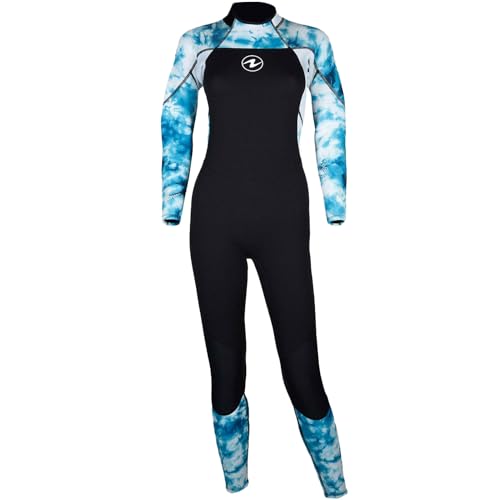
AQUALUNG Women's Hydroflex 3mm Dive Wetsuit – Durable Abrasion-Resistant Super-Stretch Neoprene Jumpsuit with Protective Kneepads for Warm Water Diving, Black Print Light Blue, Medium
For a broader comparison of thickness, fit and warmth across brands, read Scuba Diving Wetsuit 3mm: How to Choose the Right Fit and Warmth for Reef Dives and Is a 3mm Wetsuit Warm Enough? Water Temps, Tips and Gear Guide. Divers interested in another full-suit option may also want to read Aqua Lung Hydroflex 3mm Wetsuit Review: Features and Performance.
FAQ
Is the Aqualung AquaFlex 3mm wetsuit warm enough for tropical diving?
A 3mm full suit is commonly used for warm tropical water, and many divers find it comfortable in the upper 70s Fahrenheit. Individual warmth varies with body composition, dive duration and how well the suit fits.
Does the AquaFlex have knee protection?
Yes. The product name and listing identify Powertex knee protection, which is intended to resist abrasion during kneeling and contact with rough surfaces.
How should I size the AquaFlex?
Measure your height, weight and chest, then compare against the manufacturer’s size chart. Expect a snug initial fit that loosens slightly over several dives.
Is the AquaFlex suitable for cold-water diving?
Generally, no. A 3mm suit is typically not sufficient for cold water on its own. Divers in cold conditions usually need a thicker suit, a hood or added layers.
How do I care for a 3mm wetsuit like this one?
Rinse in fresh water after every dive, dry inside out away from direct sunlight, and store flat or hung loosely. Avoid petroleum-based products and harsh detergents.
Does the AquaFlex have a zipper?
The listing does not confirm the zipper style in its name. Check the product page for the exact entry configuration before purchasing.
Is this suit good for beginners?
It can be a reasonable choice for beginners diving in warm water, because the stretch material is forgiving during donning. Beginners should still try it on and confirm sizing before a course.
Should I consult a professional before buying a wetsuit?
If you have a medical condition affecting circulation or temperature regulation, or you plan to dive in demanding conditions, consult a dive professional or your physician before choosing your exposure protection.
Final Verdict
The AquaFlex is a sensible, well-defined option for recreational divers who want a flexible 3mm full suit with knee protection for warm-water diving. Its four-way stretch neoprene and reinforced knees address the two complaints most often raised about thin suits, namely restricted movement and early wear. It is not a cold-water or thermal-protection solution, and divers in cooler conditions should choose a thicker or hooded design. Measure carefully, plan for a break-in period, and compare it against the alternatives above before committing.
View on AmazonRelated reading
About Miles Sinclair
Miles Sinclair is part of our editorial team and reviews and edits our scuba diving gear guides, checking product details against manufacturer specifications and owner feedback.
About the author
Miles Sinclair writes reviews and buying guides for Scuba Lanai.