Dive Bomb Trudge Boots: 7 Best Picks for Boat Decks and Shore Dives
Compare 7 dive bomb trudge boots for boat decks, shore entries and wet gear rooms. Check fit, sole grip and neoprene thickness before you buy.

 By Elliot Wallace
Updated November 2026
Shopping for dive bomb trudge boots usually means balancing three things: how well the sole grips a wet, algae-slick boat deck or rocky shore entry, how warm the boot keeps your feet in cold water, and how easily it slips on and off over a wetsuit or drysuit bootie. This list compares seven boots that fall into two groups. Some are rubber deck and fishing boots built for stability and drainage, and others are neoprene dive boots meant to protect feet and add traction while you walk in and out of the water. The selection criteria were sole design, material, fit range, support and the kind of diving each boot suits. The information below is drawn from manufacturer specifications and common owner feedback patterns, not from our own testing.
Our top picks at a glance
- 1TOP CHOICEBest overallHUK Mens Rogue Wave Shoe, Quiet HarborView on Amazon
- 2
 TOP CHOICEBest for boat decksRogue Wave Shoe, High-Performance Fishing & Deck BootView on Amazon
- 3
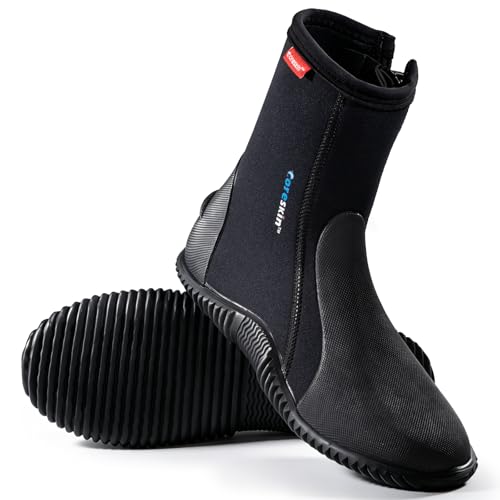 TOP CHOICEBest for cold-water shore entriesCoreskin 5mm Neoprene Dive Boots for Men WomenView on Amazon
- 4
 Best for warm-water reef divesCoreskin 3mm Neoprene Dive Boots with Anti-Slip Rubber SoleView on Amazon
- 5
 Best for wet, rainy daysKalkal Men's Deck Boots Anti-Slip Saltwater Fishing Rain Boots with Memory FoamView on Amazon
- 6
 Best for rugged field useNomad Outdoor Performance BA Rubber Ankle Boots, Mossy Oak BottomlandView on Amazon
- 7
 Best for a bold color optionHUK Mens KC Print Rogue Wave Boot, ArmyView on Amazon
Our Top Picks
Quick Comparison
| Product | Best for | Key feature |
|---|---|---|
| HUK Mens Rogue Wave Shoe, Quiet Harbor | Overall boat deck use | Rubber deck outsole with a rugged tread pattern |
| Rogue Wave Shoe, High-Performance Fishing & Deck Boot | Boat decks and fishing | Slip-resistant rubber outsole |
| Coreskin 5mm Neoprene Dive Boots | Cold-water shore entries | 5mm neoprene with anti-slip sole |
| Coreskin 3mm Neoprene Dive Boots | Warm-water reef dives | 3mm neoprene with anti-slip rubber sole |
| Kalkal Men’s Deck Boots | Wet, rainy days on deck | Memory foam insole and waterproof rubber build |
| Nomad Outdoor Performance BA Rubber Ankle Boots | Rugged field and shore use | Ankle-height rubber construction |
| HUK Mens KC Print Rogue Wave Boot | Deck and casual wear | Printed rubber deck boot styling |
HUK Mens Rogue Wave Shoe, Quiet Harbor
HUK Mens Rogue Wave Shoe, High-Performance Fishing & Deck Boot, Quiet Harbor, 10
For a deeper look, What Is a Dive Bomb Dry Bag? Uses, Features and Buying Tips covers this in detail.
Best for: Overall boat deck use with a single boot that handles wet fiberglass and gritty ramps.
This is a good fit for divers who spend most of their time on a dive boat, moving between the cabin, the swim step and the dock. The rubber outsole is the main draw, since slip resistance matters more on deck than almost anywhere else.
Key specs
- Rubber outsole with a deck-oriented tread pattern
- Designed as a high-performance fishing and deck boot
- Size 10 listing
Pros
- Strong grip on wet, sloped surfaces
- Easy to rinse off after saltwater use
- Works for both boat deck and dock walking
Cons
- Less insulation than neoprene dive boots, so cold water is a limitation
- Rubber can feel stiff until broken in
Bottom line: A strong choice for divers who want one deck boot for most boat trips and do not need thermal protection.
View on AmazonRogue Wave Shoe, High-Performance Fishing & Deck Boot
Rogue Wave Shoe, High-Performance Fishing & Deck Boot
Best for: Boat decks and fishing trips where grip is the first priority.
This model shares the Rogue Wave deck design and suits divers who also fish from the same boat. It is built for stable footing on wet surfaces rather than for water entry protection.
Key specs
- High-performance fishing and deck boot design
- Rubber construction with a slip-resistant outsole
Pros
- Built specifically for wet deck conditions
- Simple to clean after a trip
- Suitable for multi-use boat outings
Cons
- Not insulated, so it is not suited to cold-water diving
- Limited protection for feet on rocky shore entries
Bottom line: Best for anglers and divers who spend time on deck and want a dedicated, grippy rubber boot.
View on AmazonCoreskin 5mm Neoprene Dive Boots for Men Women
Coreskin 5mm Neoprene Dive Boots for Men Women – Anti-Slip Sole(HDB5mm11
Best for: Cold-water shore entries where insulation and foot protection matter most.
Divers working in cooler water or entering over stones and broken rock will get the most from the thicker 5mm neoprene. The boot is meant to be worn in the water, which makes it a different category from deck boots.
Key specs
- 5mm neoprene body
- Anti-slip sole
Pros
- Thicker neoprene retains more heat in cold water
- Protects feet from sharp rocks and shells
- Anti-slip sole helps on wet shore slopes
Cons
- Thicker neoprene can be harder to pull on over a bootie or dry sock
- Warmer than needed in tropical water
Bottom line: A practical pick for cold-water shore divers who need warmth and foot protection in one boot.
View on AmazonCoreskin 3mm Neoprene Dive Boots with Anti-Slip Rubber Sole
Coreskin 3mm Neoprene Dive Boots with Anti-Slip Rubber Sole(PP-B3M1500) | Versatile Water Sports Boots for Scuba Diving, Snorkeling, Kayaking, Wakeboarding & Beach Use, Black
Best for: Warm-water reef dives and general water sports where a lighter boot is preferred.
The 3mm version is thinner and easier to pull on, which suits divers in warmer water who want foot protection without bulk. The listing also points to use in snorkeling, kayaking and beach walks.
Key specs
- 3mm neoprene
- Anti-slip rubber sole
- Black colorway
Pros
- Lighter and more flexible than the 5mm version
- Good for warm-water reef entries
- Versatile for multiple water activities
Cons
- Not warm enough for cold-water diving
- Thinner neoprene offers less cushioning on sharp rock
Bottom line: Ideal for divers in warm water who want a light, flexible boot for reef entries and surface activities.
View on AmazonKalkal Men’s Deck Boots Anti-Slip Saltwater Fishing Rain Boots with Memory Foam
Kalkal Men's Deck Boots Anti-Slip Saltwater Fishing Rain Boots with Memory Foam, Waterproof Rubber Ankle Work Boots for Sailing (Mystery Black, Size9)
Best for: Wet, rainy days on deck where comfort during long standing periods matters.
Owners of boots in this category often mention comfort over long periods, and the memory foam insole is the feature this model leans on. It suits divers who spend extended time on a boat or at a surface interval.
Key specs
- Waterproof rubber construction
- Memory foam insole
- Anti-slip saltwater deck sole
Pros
- Cushioned footbed for long standing
- Waterproof build suits rainy departures
- Anti-slip sole for wet deck use
Cons
- Not insulated for cold-water entries
- Fit can run differently across brands, so check sizing
Bottom line: A comfort-focused deck boot for divers who stand on wet decks for hours and want a cushioned footbed.
View on AmazonNomad Outdoor Performance BA Rubber Ankle Boots, Mossy Oak Bottomland
Nomad Outdoor Performance BA Rubber Ankle Boots, Mossy Oak Bottomland, 10 | Rubber Construction, Ankle-Height Coverage, Practical Footwear for Outdoor and Hunting Trips, Outdoor Work and Field Days
Best for: Rugged field and shore use where ankle coverage and durability count.
This ankle-height rubber boot is built for outdoor work and hunting trips, and the same toughness makes it useful for rocky shore access and muddy launch ramps.
Key specs
- Rubber construction
- Ankle-height coverage
- Camouflage Mossy Oak Bottomland colorway
Pros
- Durable rubber build for rough terrain
- Ankle coverage protects against debris
- Works across outdoor and water-adjacent tasks
Cons
- Not designed for water entry or thermal protection
- Camouflage styling may not suit every dive operator’s dress code
Bottom line: A sturdy field boot for divers who also do outdoor work or shore hauling and want rugged ankle protection.
View on AmazonHUK Mens KC Print Rogue Wave Boot, Army
HUK Mens KC Print Rogue Wave Boot – Army, 11
Best for: Deck and casual wear for divers who want a printed style alongside Rogue Wave construction.
This boot carries the Rogue Wave deck design with a printed finish. It is a good choice for divers who wear their boots between dives as well as on the boat.
Key specs
- Rogue Wave deck boot design
- Printed army-style finish
- Size 11 listing
Pros
- Shares the grip-oriented deck construction
- Printed finish suits casual wear
- Easy to rinse after saltwater use
Cons
- Not insulated for cold water
- Printed finish may show wear sooner than solid colors
Bottom line: Pick this for a deck boot with a distinctive look that also works away from the water.
View on AmazonBuying Guide
Sole Grip and Tread Pattern
On a wet boat deck or a slimy shore ramp, the outsole does most of the work. Look for rubber compounds described as slip-resistant and treads with multiple sipes or channels that move water out from under the foot. Flat, smooth soles look clean but tend to slide on algae-covered surfaces.
Good picks for this: Rogue Wave Shoe, High-Performance Fishing & Deck Boot; HUK Mens Rogue Wave Shoe, Quiet Harbor
Neoprene Thickness
Neoprene thickness is measured in millimeters, and it determines how much heat the boot retains. Thinner 3mm neoprene suits warm water and makes the boot easier to pull on. Thicker 5mm neoprene gives more insulation and cushioning for cooler water and rocky entries, at the cost of extra bulk and a snugger fit.
Good picks for this: Coreskin 3mm Neoprene Dive Boots; Coreskin 5mm Neoprene Dive Boots
Fit and Sizing
Boots designed for use over dive gear should fit a size larger than usual if you wear dive socks or booties. Check the manufacturer’s size chart against your shoe size, and measure your foot length and width if you are between sizes. Sizing differs across brands, so a size that works in one model may not work in another.
Good picks for this: Kalkal Men’s Deck Boots with Memory Foam; HUK Mens KC Print Rogue Wave Boot
Ankle Coverage and Support
Ankle height matters for stability on uneven rock and for keeping debris out. Taller boots give more support when walking on loose stones or sand, but they can restrict movement when kneeling or climbing a ladder. Consider how much of your time is spent on uneven terrain before choosing height.
Good picks for this: Nomad Outdoor Performance BA Rubber Ankle Boots; Coreskin 5mm Neoprene Dive Boots
Insulation and Water Temperature
Rubber deck boots offer little thermal protection, so they suit warm conditions and boat decks. For cold water, choose neoprene with enough thickness to retain body heat. Remember that water temperature, not air temperature, determines how much insulation you need, and cold feet can affect comfort through the whole dive.
Good picks for this: Coreskin 5mm Neoprene Dive Boots; Coreskin 3mm Neoprene Dive Boots
Comfort and Footbed
Long periods of standing on a deck or walking between entries can be tiring. Memory foam or cushioned insoles can reduce fatigue, and a footbed that holds its shape keeps the foot stable inside the boot. Try the boot with the socks you plan to wear, since thicker socks change the feel.
Good picks for this: Kalkal Men’s Deck Boots with Memory Foam; HUK Mens Rogue Wave Shoe, Quiet Harbor
Care and Drying
Saltwater, sand and sunlight shorten the life of rubber and neoprene. Rinse boots in fresh water after each use, dry them out of direct sun, and keep them away from heat sources that can warp neoprene. Store them loosely so air can circulate, which prevents odor and mildew buildup.
Good picks for this: Nomad Outdoor Performance BA Rubber Ankle Boots; Rogue Wave Shoe, High-Performance Fishing & Deck Boot
FAQ
Can I wear dive bomb trudge boots for diving itself?
Deck boots like the Rogue Wave models are built for walking on boats and wet surfaces, not for wearing underwater. Neoprene dive boots are designed for water entry and can be worn in the water. Check each product’s intended use before you buy.
What is the difference between a deck boot and a neoprene dive boot?
Deck boots are usually rubber, with grippy soles and little insulation. Neoprene dive boots are soft, insulating and designed to be worn in the water, often with a thicker sole for protection on rock or sand.
How thick should neoprene dive boots be?
Thinner boots around 3mm suit warm water, while thicker 5mm boots suit cooler conditions. Choose thickness based on water temperature and how much warmth you need during a dive.
Should I buy a larger size to fit over dive socks?
Often yes. Thicker socks or booties take up space inside the boot, so many divers size up. Compare the manufacturer’s size chart with your foot measurements and try the boot with the socks you plan to use if possible.
How do I keep my boots from smelling?
Rinse them in fresh water after every use, let them dry fully in shade, and store them with airflow. Avoid sealing wet boots in a bag, which encourages mildew and odor.
Are rubber deck boots good for cold-water diving?
They offer little insulation and are generally better suited to warm conditions or boat decks. For cold water, neoprene boots with more thickness are a better match.
How long do neoprene dive boots typically last?
Lifespan depends on use, storage and exposure to sun, salt and heat. Owners often report that rinsing and drying boots carefully extends their service life. Replace boots when you notice cracking, tears or loss of fit.
Conclusion
For most divers, the right choice depends on where they will be walking and how cold the water is. If boat deck grip is the priority, the HUK Mens Rogue Wave Shoe, Quiet Harbor and the Rogue Wave Shoe, High-Performance Fishing & Deck Boot are the strongest options in this list. For cold-water shore entries, the Coreskin 5mm Neoprene Dive Boots offer the most warmth and foot protection. For warm reef dives, the Coreskin 3mm Neoprene Dive Boots are lighter and easier to pull on. The Kalkal deck boot suits long hours on wet decks, the Nomad rubber boot fits rugged field use, and the HUK KC Print model suits divers who want a printed look that works away from the water.
Sources
- Product safety guidance and recall information for footwear and water sports gear (cpsc.gov)
- Guidance on wet and rocky shoreline conditions and safe access to the water (nps.gov)
- Water temperature and marine environment information relevant to choosing insulation (noaa.gov)
Related reading
- Top 9 Ocean Quest Dive Lights for Night and Reef Diving
- Top 5 Tempered Glass Dive Masks Compareds for Reef and Boat Diving
- Top 5 Best Dive Mask and Snorkel Picks for Reef and Shore Diving (2026)
- Princeton Tec 400 Dive Light Alternatives: 7 Best Options Compared (2026)

About Elliot Wallace
Elliot puts together our scuba diving gear guides, digging through specifications, manufacturer details and owner reviews so you don't have to.
About the author
Elliot Wallace writes reviews and buying guides for Scuba Lanai.